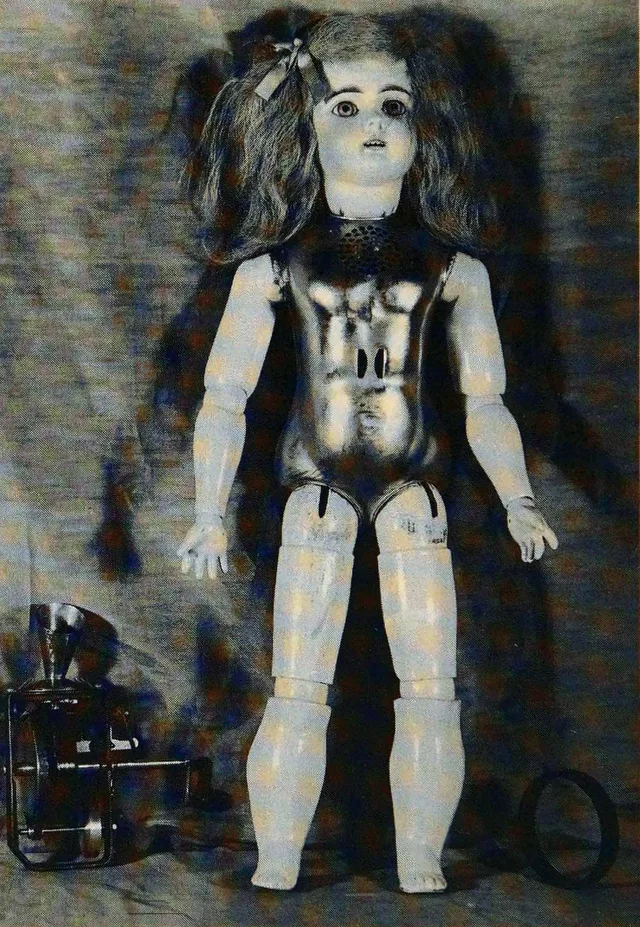
A doll utters a nursery rhyme, but she doesn’t use a modern speaker or electronic battery. In 1890, the talking dolls marketed by Edison contained a tiny phonograph. Their voice came from a mechanical recording, placed in the body of the toy and read by a fragile device.
The making of the voices required unusual work. At that time, a reliable industrial method of duplication was not available for these small recordings: women therefore recorded the recitations intended for dolls. The product was a commercial failure and its sale stopped quickly, after a period of about a month.
The preserved cylinders then posed another difficulty: rereading them risked damaging them. Imaging techniques have made it possible to recover certain sounds without passing a point in their grooves. What we hear today can thus come from an ancient object that has long been silent. The failed toy left a much more lasting mark: voices actually recorded at the end of the 19th century.
What we know
Short commercialization in 1890; restored old recordings are not AI voices.
To go to the source
- National Park Service — Edison Talking Doll Recordings (new tab)↗
- National Park Service — Early talking doll recording discovered (new tab)↗
References accessed October 11, 2026. Linked pages may be in another language.
Signaler une erreur ou apporter une précision