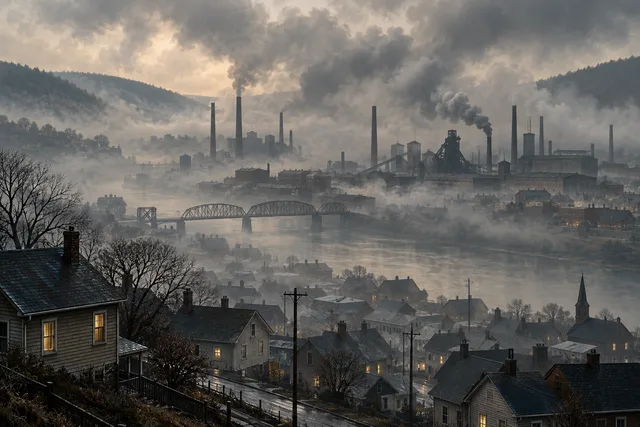
In October 1948, Donora was enveloped by a fog laden with pollution. This industrial city of Pennsylvania is already experiencing the fumes of its metallurgical activities. But a particular weather situation turns this usual exposure into an acute health crisis.
A warmer layer of air is above the cold air close to the ground. Polluted air no longer disperses normally. Emissions accumulate in the city, where people live and breathe. Residents remain exposed to this mixture that accumulates around homes and factories.
According to the U.S. Environment Agency’s historical account, nearly half of the 14,000 residents experience severe respiratory or cardiovascular problems during the episode. Death tolls vary according to the periods counted; the reality of the disaster, on the other hand, does not depend on a spectacular isolated figure.
No factory needed to explode. The pollutants had simply stopped dispersing, making the city’s daily air unsafe.
What we know
Death counts differ depending on the period; no single death toll is imposed.
To go to the source
References accessed October 11, 2026. Linked pages may be in another language.
Signaler une erreur ou apporter une précision