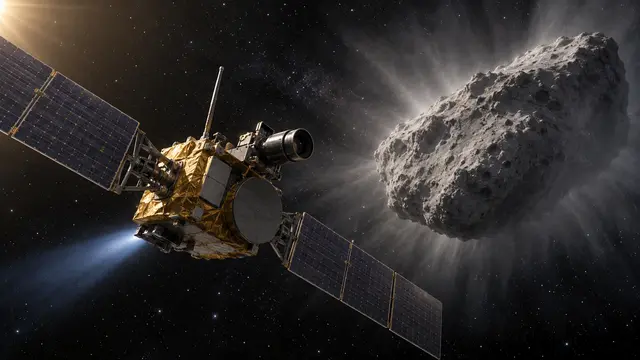
Deep Space 1 was to test new technologies, including an ion engine and autonomous navigation. After its launch in 1998 and its initial mission, officials planned to send it to Comet Borrelly. Then his star sensor broke down.
This equipment helped the probe determine its orientation. Engineers have developed a new way to control it, using its camera as a replacement. The software was transmitted remotely: we obviously could not send a technician to change the part on the spot.
In September 2001, Deep Space 1 reached the comet and returned images of its nucleus. The mission was not made perfect retroactively; a previous asteroid flyby had provided blurry images. But the breakdown that threatened the rest of the trip could be circumvented by modifying the use of an instrument already on board.
What we know
Documented software rescue; not remote physical repair of the sensor.
To go to the source
References consulted on 3 October 2026. Linked pages may be in another language.
Signaler une erreur ou apporter une précision