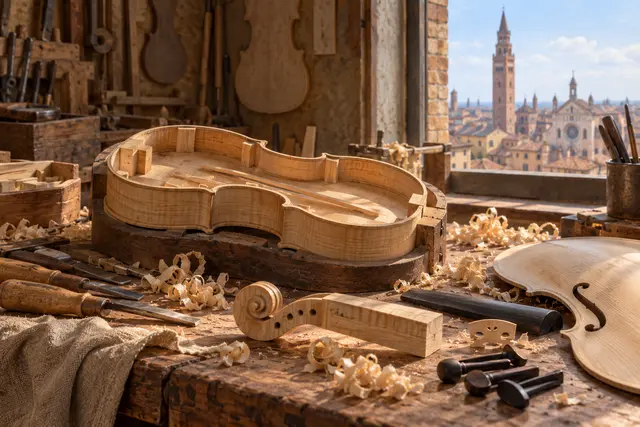
From a distance, the body of a violin gives the impression of a continuous shape, almost a single shell. In the traditional Cremona lutherie described by UNESCO, the instrument results from more than seventy pieces of wood shaped and assembled by hand. Its final unity is the result of the work.
Each element requires a naturally selected and dried wood. The luthier builds around an inner mold, adjusts the parts and mobilizes his own knowledge of the material. The heritage description evokes a production of a few instruments per year. This rhythm concerns this artisanal know-how and is not a rule applicable to all violin making.
The work thus gives instruments of the same silhouette a real individuality. Two violins do not become identical simply because they wear the same strings and occupy the same case. Before the musician made his first note, another performer already made many decisions: the one who had to make all these pieces respond together.
What we know
Description of the traditional know-how; no unique sound secret claimed.
To go to the source
References consulted on September 21, 2026. Linked pages may be in another language.
Signaler une erreur ou apporter une précision