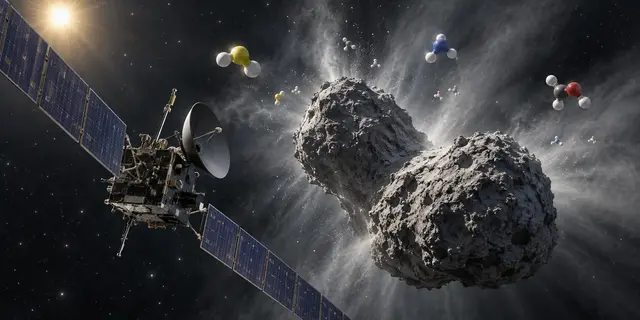
A comet is often described by its light and trajectory. In 2014, Rosetta’s ROSINA instruments offered another way to talk about 67P: the molecules around its nucleus. Among the substances detected is hydrogen sulfide, known on Earth for its rotten egg smell.
The team also identified ammonia, methanol and other compounds. ESA has presented this combination as a “scent” to help the public imagine its chemistry. However, the researchers did not remove their helmet to breathe above the comet: the measurements come from mass spectrometers.
Gases are extremely diluted in this space environment, and a comparison with terrestrial odors does not describe an atmosphere that could be inhaled. The story remains amazing without this shortcut. A machine sent to meet a distant world has found chemical signatures that our words can approximate to a household product or a spoiled food.
What we know
Molecules detected by instrument; terrestrial odors used as an analogy, without human olfactory experience on the spot.
To go to the source
References consulted on 3 October 2026. Linked pages may be in another language.
Signaler une erreur ou apporter une précision