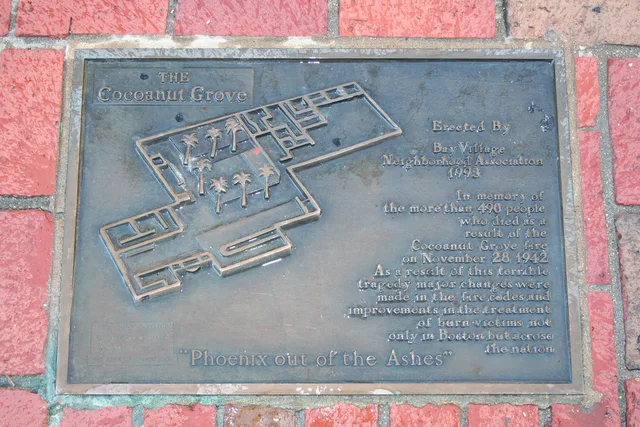
The Cocoanut Grove is a busy Boston hotel. On November 28, 1942, a fire developed in the middle of combustible decorations. Smoke and gas quickly invade occupied spaces. The crowd tries to reach the exits in a building that has become difficult to navigate.
At the main entrance, the revolving door is blocked under pressure from people. Other exits are hidden, locked or poorly adapted: a door opening inwards can no longer work when the crowd pushes against it. The ordinary features of the place become obstacles.
The Boston Firefighter History Archive describes the following regulatory changes. Outputs must be accessible, identifiable and usable. A revolving door alone can no longer be the answer to evacuate an emergency crowd.
The tragedy kills hundreds of people, but the precise number depends on the results consulted. Its origin is also the subject of historical debates. What is clear from the archives is the succession of barriers encountered by customers who were simply trying to leave the club.
What we know
The origin of the fire remains discussed; death tolls vary according to the archives.
To go to the source
- Boston Fire Historical Society — The story of the Cocoanut Grove fire (new tab)↗
- Ville de Boston — Cocoanut Grove Memorial (new tab)↗
References accessed October 11, 2026. Linked pages may be in another language.
Signaler une erreur ou apporter une précision