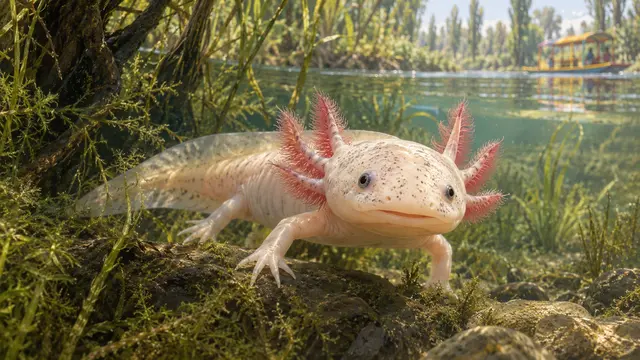
A lost leg does not grow back in most mammals. Axolotl, on the other hand, has regenerative abilities that explain its place in many laboratories. They concern the limbs, but also some other tissues, including parts of the brain.
The Natural History Museum describes research on genes activated after an injury and the stages of this reconstruction. Finding a functional form requires more than a simple multiplication of cells: different structures must reform and organize together.
This power does not mean that the animal is resistant to all injuries or that an equivalent method already exists for us. The mechanisms are still being studied. The contrast is even striking: an animal capable of such repairs remains threatened in its natural environment. Rebuilding a limb does not allow it to rebuild the wetlands on which its existence depends.
What we know
Regeneration of parts of the body, no invulnerability or available human regeneration; do not transform “parts of the brain” into the whole brain.
To go to the source
References consulted on September 21, 2026. Linked pages may be in another language.
Signaler une erreur ou apporter une précision