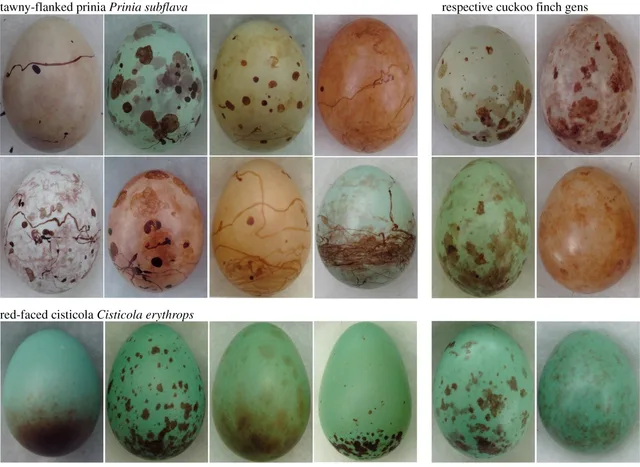
An extra egg appears in the nest of another bird. For the parasitic anomalospize, reproduction passes through this repository: a host species is found incubating an egg that is not its own. The resemblance of its shell to those of the nest can then become decisive.
In Zambia, researchers have studied how this bird retains several types of imitation despite crossbreeding between individuals. Their work links color and pattern characters to maternal transmission, associated with the W chromosome. A girl can thus inherit her mother’s egg type without the father necessarily mixing this character with that of another lineage.
This system promotes specializations, but it also imposes limits on the eggs of evolving hosts. The study does not describe an animal voluntarily painting its shell. Rather, it reveals a history of heredity in which the appearance of an egg is transmitted, while the nest where it is placed belongs to another species.
What we know
Maternal heredity refers to the characteristics of the eggs studied; no forgery intention demonstrated.
To go to the source
References accessed October 11, 2026. Linked pages may be in another language.
Signaler une erreur ou apporter une précision