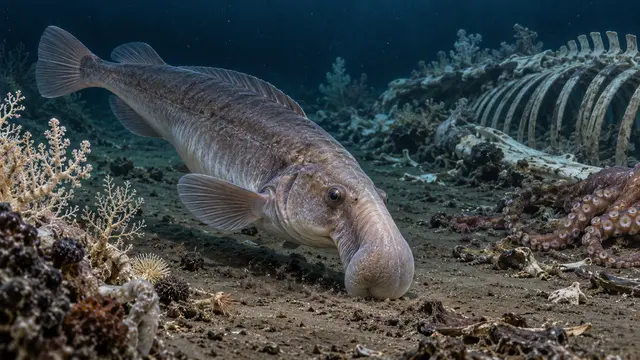
On the abyssal background, Spectrunculus grandis is looking for invertebrates and animal remains. His large olfactory organs earned him the nickname "swimming nose". In a muddy landscape where food does not necessarily appear nearby, the smell becomes a valuable clue.
Researchers have observed it in several contexts off California: near coral gardens, around whale carcasses and at the site called Octopus Garden, where dead octopuses also provide a resource. The fish therefore exploits meals of different origins.
Organic fragments from the upper waters contribute to the feeding of the deep sea. Spectrunculus doesn’t just wait for a living prey to pass before its eyes. By tracking the resources on the bottom, this great fish shows how part of the abyssal life depends on what happens to other levels of the ocean.
What we know
Descriptive nickname; documented feeding, not diet limited to carcasses.
To go to the source
References consulted on 3 October 2026. Linked pages may be in another language.
Signaler une erreur ou apporter une précision