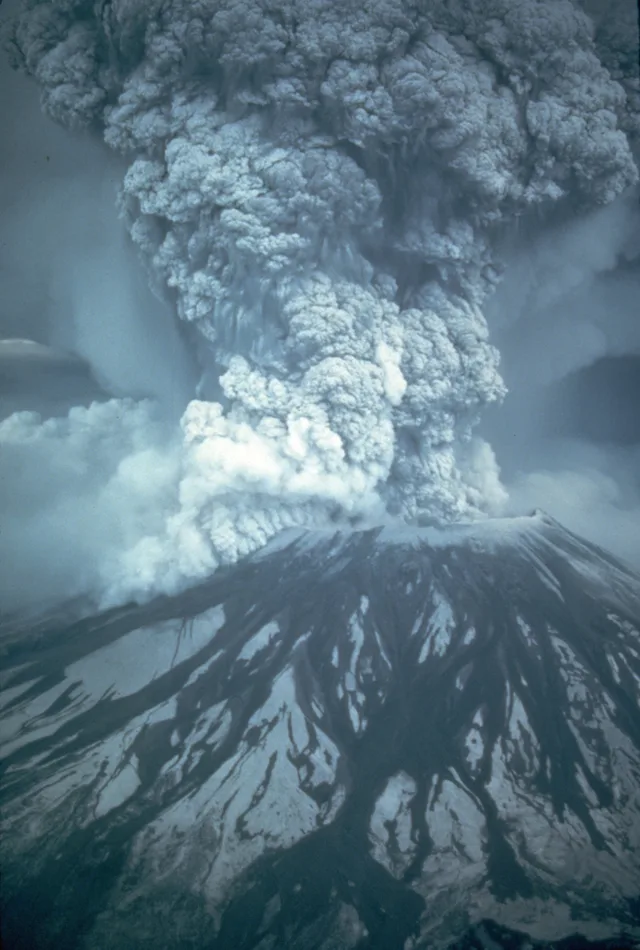
In the spring of 1980, the northern flank of Mount Saint Helens swelled. Magma has entered the building without yet leaving this place. On May 18, an earthquake accompanied the collapse of the summit and slope: part of the mountain glides, abruptly removing the pressure that confined the volcanic system.
An explosion is then directed laterally through the opening left by the rockfall. The danger does not come only from a column rising above the crater. A blast of gas and burning materials sweeps the landscape to the side. A long vertical explosive eruption also develops in the sequence of events.
The mountain first changed shape, then lost a piece that held the pressure. Drawing any volcano as a cone expelling only upwards would mask the essential mechanism here.
What we know
Collapse, pressure release and lateral explosion are related events; do not reverse this chain for dramatic effect.
To go to the source
References accessed October 11, 2026. Linked pages may be in another language.
Signaler une erreur ou apporter une précision