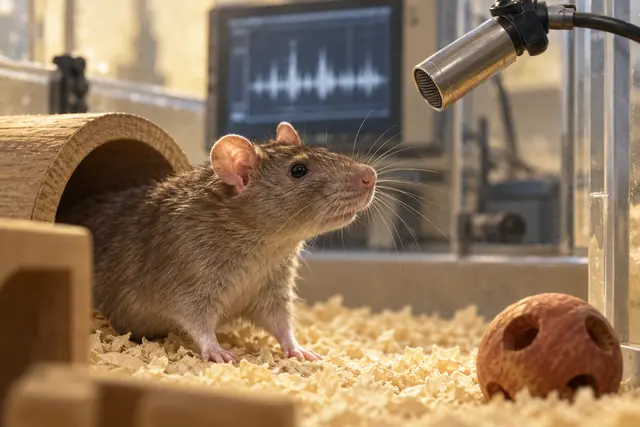
A rat can react to game interactions by vocalizations around 50 kilohertz. We do not hear them directly. However, devices make it possible to record them, and the researchers bring them closer to a positive emotional state signal.
In a study published in 2012, rats subjected to experimental tickling then encountered an ambiguous signal in a learned task. Those who vocalized a lot responded more “optimistically” according to the behavioral measure used. Not all animals reacted in the same way.
The word laughter makes this discovery memorable, but does not turn rats into lovers of human jokes. It refers here to a comparison between vocalizations, play and emotions. The fascinating detail is elsewhere: a seemingly silent experience for the observer may contain sound exchanges that his ear is simply unable to follow.
What we know
rire Analogy with laughter; association measured in protocol and subgroup, not demonstrated understanding of human humor.
To go to the source
References consulted on September 21, 2026. Linked pages may be in another language.
Signaler une erreur ou apporter une précision