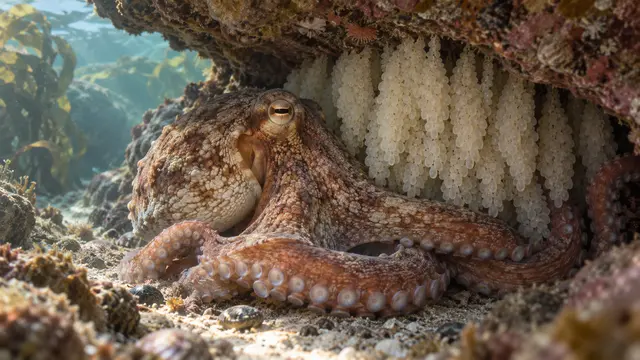
After breeding, female octopuses devote their time to their eggs, stop feeding and then experience a rapid decline. In the observations studied, this phase may also involve injuries that the animals inflict on themselves.
A study published in 2022 in Current Biology examines the secretions of the optic glands, neuroendocrine centers involved in this transition. The researchers identify several routes of production of sterol-derived substances, the activity of which changes after reproduction.
Reducing this behavior to an octopus that would eat its arm because it is stressed thus erases an essential biological context. The study explores a life transition related to reproduction and hormonal regulation. It doesn’t explain every injury in every octopus, but shifts the question: some amazing behaviors can only be understood by looking at the entire life cycle.
What we know
Reproductive context studied; no universal stress causation autocannibalism, nor description attributed to all octopuses.
To go to the source
References consulted on September 21, 2026. Linked pages may be in another language.
Signaler une erreur ou apporter une précision