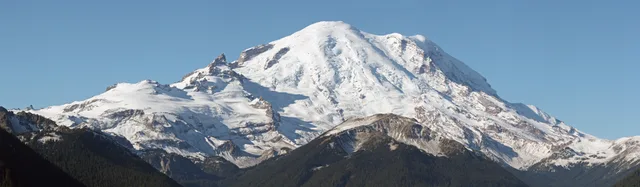
About 5,600 years ago, part of the summit and northeast flank of Mount Rainier collapsed. Rocks weakened by hydrothermal activity and rich in water are moving. The avalanche quickly turns into a huge debris flow called Osceola Mudflow.
Water is not a simple element that accompanies the blocks. Together with the clay particles, it contributes to the mobility of the mixture. The deposits studied by geologists show that the flow fills valleys, travels more than a hundred kilometers and reaches the Puget Sound region. The summit then retains a large open crater, partially filled by subsequent eruptions.
The story comes from the analysis of the terrain, without witnesses or ancient photography. Lands far from the volcano, however, preserve the traces of its materials.
What we know
Dating and dimensions are geological reconstructions. No future scenario or current population condemned is announced.
To go to the source
References accessed October 11, 2026. Linked pages may be in another language.
Signaler une erreur ou apporter une précision