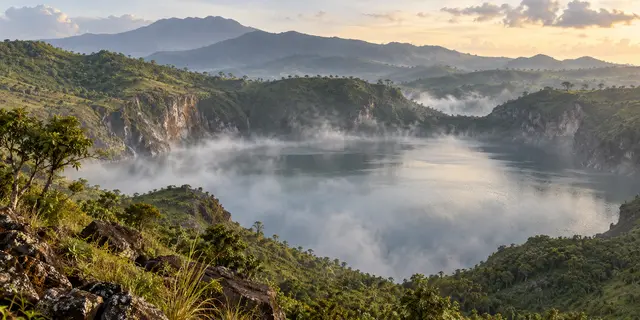
On August 21, 1986, Lake Nyos, Cameroon, suddenly released a large amount of gas. The disaster killed at least 1,700 people, according to the USGS report. The phenomenon does not resemble the usual image of an eruption projecting lava on a village.
Carbon dioxide had accumulated in the waters of the lake. Its massive release creates a dangerous atmosphere in the surrounding area. The report describes the volcanic context under the basin, which allows gas from the depths to gradually rise towards the waters.
Saying that a lake can “explode without a volcano” would therefore make an important part of the explanation disappear. This is a catastrophic gas emission in a volcanic environment, not an explosion of water or an ordinary lake spontaneously becoming explosive. This drama revealed that the tranquility of a surface could hide a very different phenomenon under it.
What we know
Catastrophic CO₂ degassing; volcanic context preserved, precise trigger not invented.
To go to the source
References consulted on September 21, 2026. Linked pages may be in another language.
Signaler une erreur ou apporter une précision