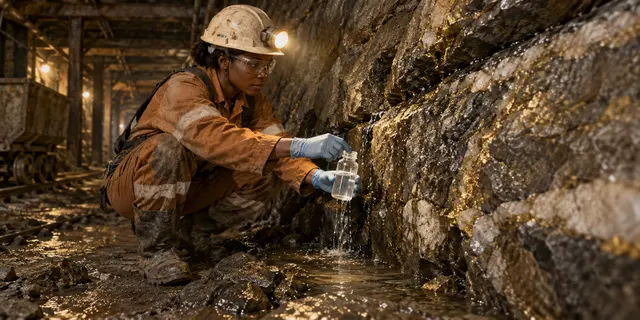
Going down several kilometers below the surface seems to drive away from anything that allows life. Yet researchers have found microbial diversity in water taken from fractured rocks in South African gold mines, about three kilometers deep.
An article by Woods Hole Oceanographic Institution presents this work among the discoveries that have expanded the knowledge of the underground biosphere. The environments involved are not limited to mines: marine sediments, cracks in the oceanic crust and other deep environments also host adapted microorganisms.
This world is not a hidden forest or an ocean populated by large animals. Instead, it forces people to change scales and search for life in tiny spaces, with chemical resources very different from those of a garden. The terrestrial surface, so familiar, is only a part of the places where the living finds a possibility to subsist.
What we know
Documented examples of deep biosphere; no presumed life anywhere or in the extreme conditions of the mantle.
To go to the source
References consulted on September 21, 2026. Linked pages may be in another language.
Signaler une erreur ou apporter une précision