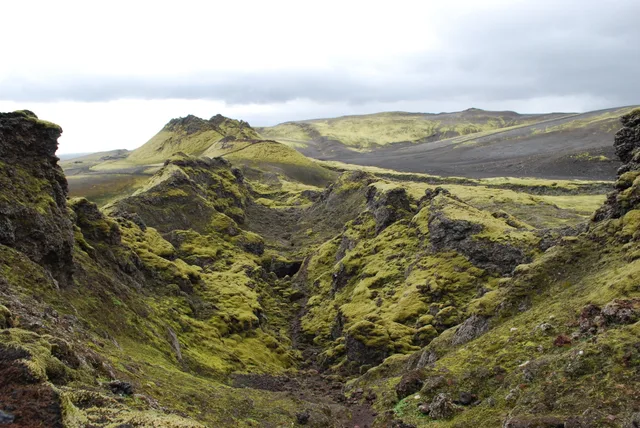
In the second half of 1783, a persistent haze spread over Europe. It’s not just a local fog formed by a wet morning. It is linked to the fissure eruption of Laki, in southern Iceland, whose emissions feed a vast atmospheric veil.
A study published in 1996 and referenced by NASA reconstructs its progression from contemporary descriptions. It identifies aerosols of sulphuric acid and locates most of this haze in the troposphere. Observations collected far from the volcano thus become clues to understand what the atmosphere had transported.
The link with the harsh winter of 1783–1784 has been the subject of work and discussion: we must not transform any climatic difficulty of the time as a result of certain Laki. What is already documented is enough to surprise: residents of several countries have observed the veil of an eruption located well beyond their horizon.
What we know
The exact influence on the following winter remains discussed; no simplistic causal link with the French Revolution is advanced.
To go to the source
References accessed October 11, 2026. Linked pages may be in another language.
Signaler une erreur ou apporter une précision