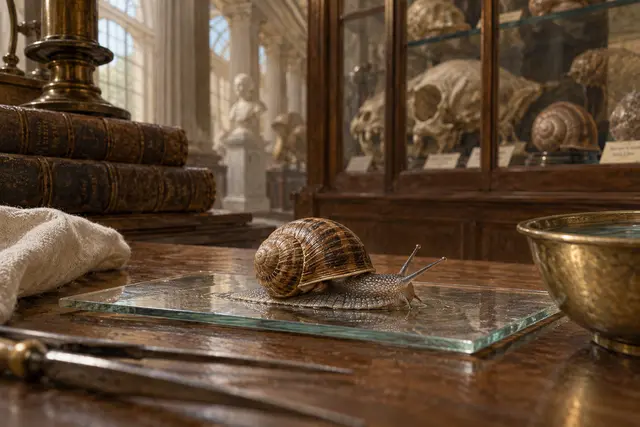
On March 25, 1846, a snail was fixed on a small glass plate and installed in a window of the British Museum. It is treated like a dead specimen. Nothing, apparently, requires us to prepare him for a future different from that of the other objects on display.
On March 7, 1850, a trace on the plaque attracted attention. According to the account in The Australian Museum Magazine, the specimen appears to have attempted to move. Detached and then placed in warm water, the animal comes out of its shell. An illustration is made of it.
This ancient history concerns a state of dormancy and does not mean that all snails normally sleep for several years. The word “sleep” here masks an adaptation to difficult conditions. The surprise also comes from the museum: what had been classified among the objects kept a life discreet enough to escape the classification.
What we know
Historical story attributed to a museum publication; exceptional dormancy, not normal snail sleep duration.
To go to the source
References consulted on September 21, 2026. Linked pages may be in another language.
Signaler une erreur ou apporter une précision