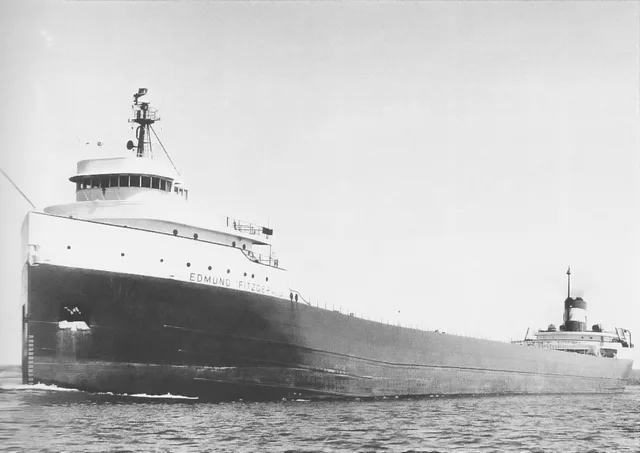
On November 10, 1975, Edmund Fitzgerald sailed on Lake Superior with a load of ore. This great cargo ship does not face an ocean crossing, but a storm on a lake. It sank with its 29 crew members. No one on board survives to tell the last moments directly.
The National Transportation Safety Board examines the weather conditions, the condition of the vessel and the possible penetration of water into the holds. Its report identifies a probable cause related to water flooding and loss of buoyancy. This is an investigative conclusion; exact mechanisms and other explanations have continued to be discussed.
The size of the ship and the word "lake" can give a misleading impression of safety. The open distances and winds of Lake Superior allow for severe maritime conditions. The narrative remains attached to observations and reports, without inventing a single wave or a spectacular final sentence pronounced on board.
What we know
The probable cause of the report is not a complete observation of the last seconds.
To go to the source
- NTSB — Marine Accident Report, SS Edmund Fitzgerald (new tab)↗
- NOAA National Weather Service — Edmund Fitzgerald historical event (new tab)↗
- NTSB — DCA76AM001, synthèse de l’accident (new tab)↗
- Michigan Sea Grant — The Storm that Sunk the Edmund Fitzgerald (new tab)↗
References accessed October 11, 2026. Linked pages may be in another language.
Signaler une erreur ou apporter une précision