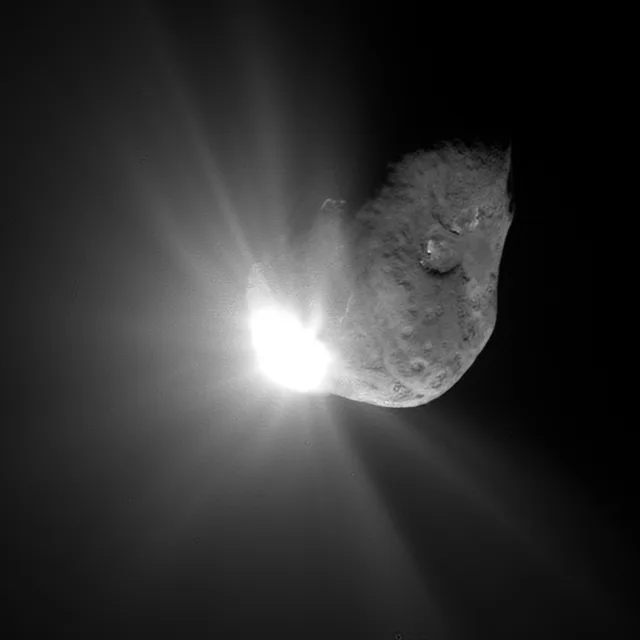
On July 4, 2005, a collision illuminated the surface of Comet Tempel 1. The crash is not one of them: the Deep Impact mission deliberately sent an impactor to the core. The aim was to bring up a subject that had been difficult to examine.
One part of the probe ensured this non-return journey, while the other observed the encounter. The shock produced a flash and a cloud of dust and ice. The instruments could then analyze the expelled materials rather than look only at the intact surface.
The mission provided information on frozen water and organic compounds in the comet. “Organic” here describes a chemical category: it does not mean that Deep Impact would have discovered living organisms hidden in the nucleus.
It was not a defense mission against a danger to the Earth. The impact was used to make old matter accessible for remote examination.
What we know
Experimental impact in 2005; different from DART and Hayabusa, with no comet threat to Earth.
To go to the source
References accessed October 11, 2026. Linked pages may be in another language.
Signaler une erreur ou apporter une précision