A hummingbird seems to be holding up in the air as its wings become almost invisible. The buzz that accompanies this flight depends on their beats, the rhythm of which varies according to the species and the activity. A single figure cannot summarize all hummingbirds.
The San Diego Zoo reminds us that this active life requires a lot of energy for such a small body. The bird continues to flap its wings when it feeds while hovering. The need for resources does not disappear when it reaches a flower.
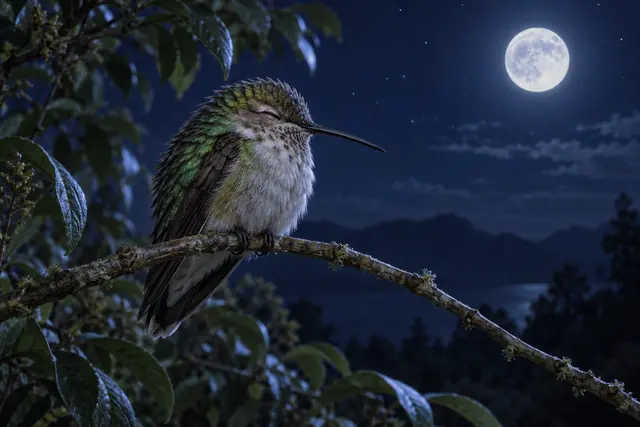
At night, another strategy becomes possible: torpor is accompanied by a drop in body temperature and heart rate, which saves energy. The contrast is more interesting than an isolated record. The same animal associates intense activity with the ability to slow down strongly when conditions make this slowdown valuable.
What we know
Variable rhythms; values of 80 wing beats/s and 1200 heart beats/min are not assigned indiscriminately to all species.
To go to the source
References consulted on September 21, 2026. Linked pages may be in another language.
Signaler une erreur ou apporter une précision