A spider that moves through the air doesn’t necessarily have a way to flap its wings. Some release silk threads and practice an aerial dispersion called ballooning. The wind intervenes, but experiments have highlighted another actor: atmospheric electricity.
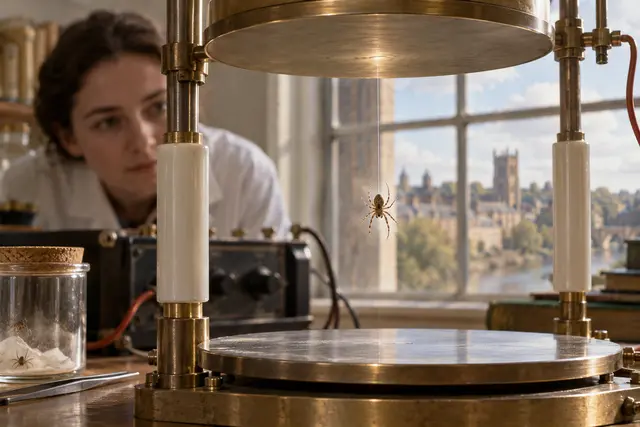
In 2018, in Bristol, researchers exposed small spiders to controlled electric fields, comparable in intensity to those encountered in the atmosphere. In their device, activating or cutting the field changes their vertical motion. Animals can rise in the absence of wind.
This result does not eliminate the role of drafts in nature. It enriches the explanation of a departure long associated with the wind alone. The spider did not invent a hidden engine: it has a silk whose interactions with the environment allow us to take advantage of forces we do not see.
What we know
Brings together the proposals on take-off and electricity. Experimental results on the species studied, not all spiders.
To go to the source
References consulted on September 21, 2026. Linked pages may be in another language.
Signaler une erreur ou apporter une précision