Did you know that an artificial intelligence has surpassed poker professionals without seeing their cards? In two thousand nineteen, Pluribus plays Texas Hold'em with no limit to six players. This time, it is necessary to reason with information that the opponents keep hidden. The difficulty also comes from the number of players. A decision does not respond to a single opponent: several people can bet, follow or lie down. The computer learns a strategy that takes into account this uncertainty, not a magic reading of the cards in the hands.
A protocol includes ten thousand hands with artificial intelligence facing five humans. The performance exceeds that of the professionals on this set. That doesn’t mean winning every shot: in poker, a good decision can still lose a particular hand, just by chance.
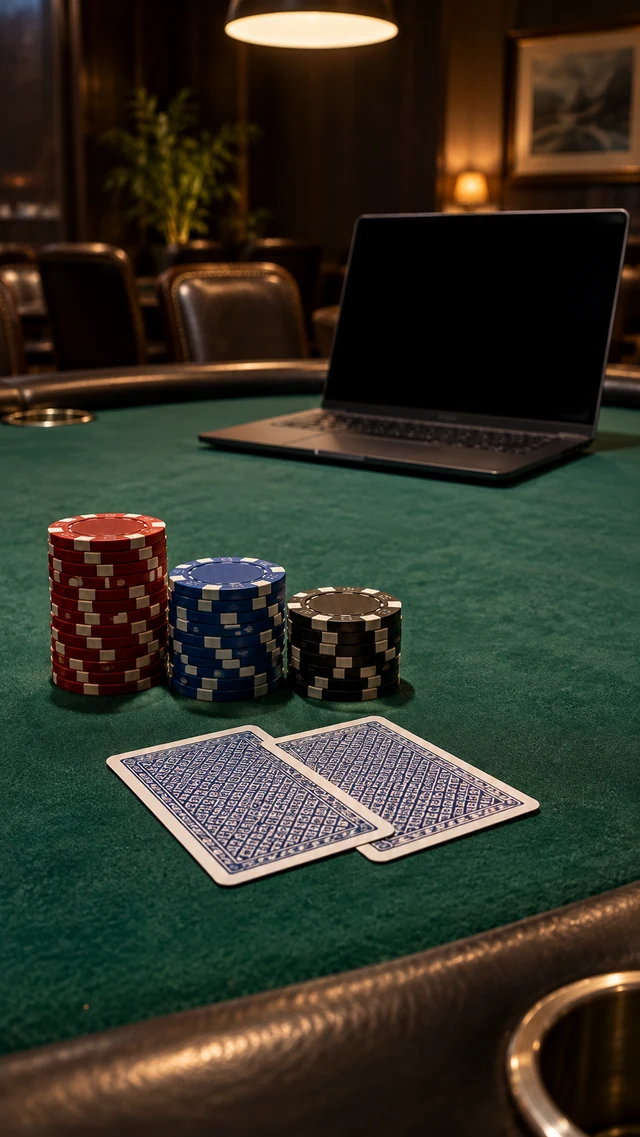
The cards and chips in this illustration do not reproduce any historical hand. This is not a win in a casino. The interesting result is elsewhere: an artificial strategy can become very strong even when it does not know the whole situation.
What we know
Performance is assessed on a set of hands, with no access to opponents’ private cards. It doesn’t mean winning every hand or winnings in a casino.
To go to the source
References consulted on October 12, 2026.
Signaler une erreur ou apporter une précision