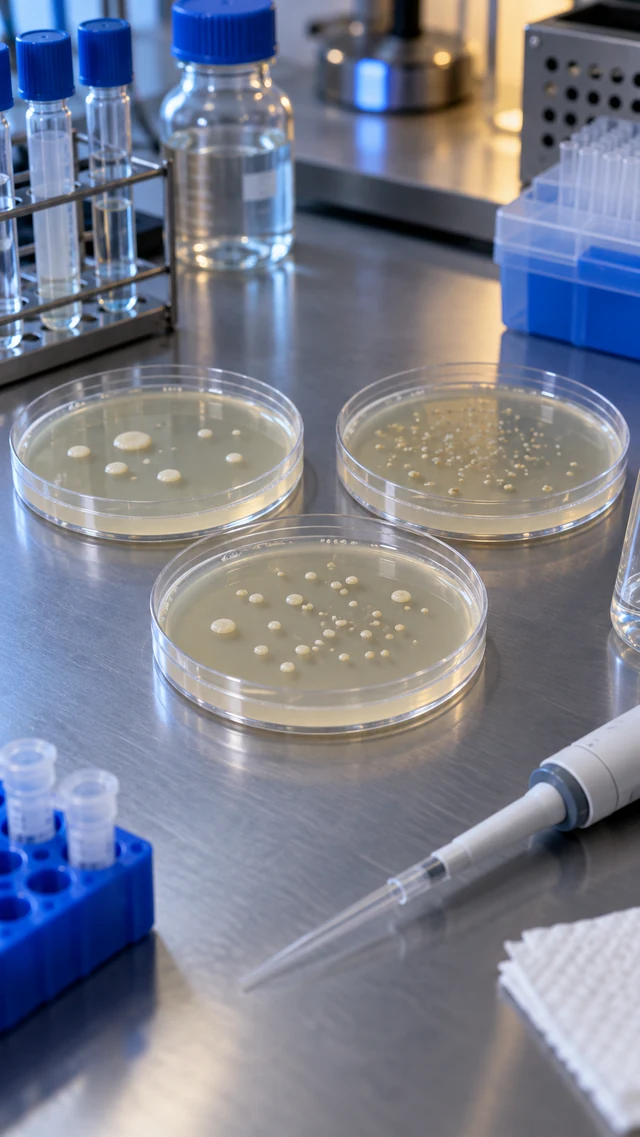
Did you know that an AI-assisted search spotted a molecule against bacteria? In two thousand and twenty, researchers describe halicin. This is not a story of healing: the result presented is laboratory and preclinical experiments, not a promise of treatment. The model helps to select candidates from molecules, and then researchers must test them. Our bottle illustrates this material step, without representing the structure of halicin. The substance does not turn into an approved drug because a screen assigns it a good prediction.
The publication describes antibacterial activity and trials in experimental models, including mice. This provides a search trail. Efficacy measured under these conditions is not sufficient to demonstrate the safety, dose or efficacy of treatment in human patients.
The story shows an alliance between computer research and experimentation. It does not recommend using this molecule or modifying a treatment. A promising avenue remains to be studied: the illustration tells the selection process, while the source establishes the result and its real perimeter.
What we know
The results on halicin relate to laboratory and preclinical experiments. They do not prove approved, safe or effective human treatment in all patients.
To go to the source
References consulted on October 12, 2026.
Signaler une erreur ou apporter une précision