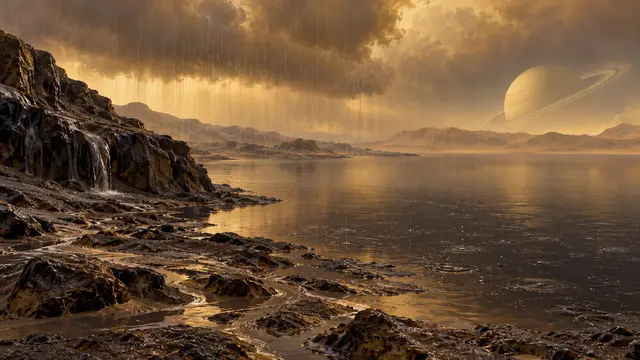
Clouds, rain, rivers, lakes: at first glance, the list looks like a terrestrial description. It can also evoke Titan, the great moon of Saturn studied by the Cassini-Huygens mission.
The resemblance hides a fundamental difference. In the Titan cold, the liquid surface cycle involves hydrocarbons, mainly methane and ethane. Dark expanses are not fresh water reserves that would wait for mariners.
Titan’s interest does not come from a copy of Earth. It comes from recognizable processes that work with other substances and under other conditions. A landscape can seem familiar from the images of a probe, then become radically foreign as soon as one asks this simple question: what is its rain made of?
What we know
The surface lakes described here are hydrocarbons; they should not be confused with a possible internal ocean.
To go to the source
References consulted on September 20, 2026. Linked pages may be in another language.
Signaler une erreur ou apporter une précision