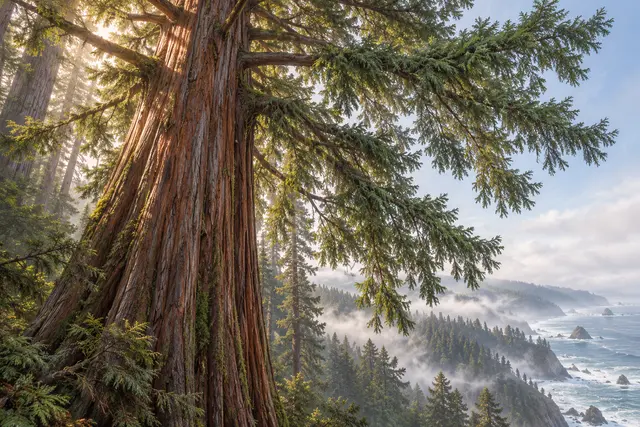
In coastal redwood, researchers have shown an astonishing distribution of tasks. Two types of leaves contribute differently to the tree’s diet: some favor photosynthesis, others water absorption.
The study presented in 2022 by UC Davis compares their anatomy and functioning, especially after exposure to an experimental fog. The so-called axial sheets effectively absorb water while contributing little to photosynthesis. The peripheral leaves, more oriented towards the latter, have a waxy surface that hinders the entry of water.
Their distribution in the crown also varies between the wetter and drier environments studied. The discovery does not mean that the tree goes without roots or consciously chooses a post for each leaf. It reveals an organization that helps reconcile two sometimes competing needs: receiving water on surfaces and keeping foliage capable of working in light.
What we know
Result on the coastal redwood; do not automatically extend it to all trees.
To go to the source
References consulted on 3 October 2026. Linked pages may be in another language.
Signaler une erreur ou apporter une précision