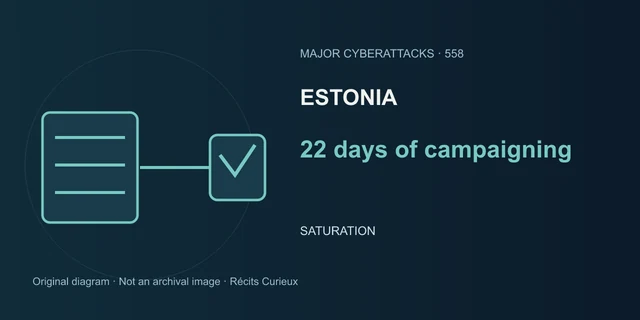
In the spring of 2007, the relocation of a Soviet monument to Tallinn caused a political crisis. In the days that followed, Estonian services suffered waves of cyber attacks. The campaign lasts about twenty-two days, according to the Tallinn Cyber Defense Center study.
An essential part of operations is denial of service: multiplying requests to prevent normal users from accessing the services. Targets include banks, media and public institutions. The visible goal is not to transfer all bank deposits to a hacker account.
The attacks combine several forms of mobilization, from relatively simple actions to the use of networks of machines. The distributed character complicates the defense: the traffic can come from many places that do not necessarily correspond to the location of its organizers.
Teams observe waves, filter traffic and work with partners to maintain services. Certain restrictions can protect an infrastructure while temporarily restricting its access from outside. The defense then becomes an arbitration between availability and exposure.
The general attribution remains more delicate than the political context suggests. Actors and claims are associated with Russia, but this is not enough to prove a single state order for each operation. The narrative does not transform a global suspicion into the judicial identity of all participants.
Estonia 2007 marks the debate on collective security: a national crisis can unfold in front of the screens of access to a bank or a newspaper, without spectacular theft and without visible physical destruction.
What we know
Saturation campaign, not erasing any Estonian Internet. Russia-related background and clues separate from evidence of a single command of all attacks.
To go to the source
References consulted on 30 October 2026. Linked pages may be in another language.
Signaler une erreur ou apporter une précision