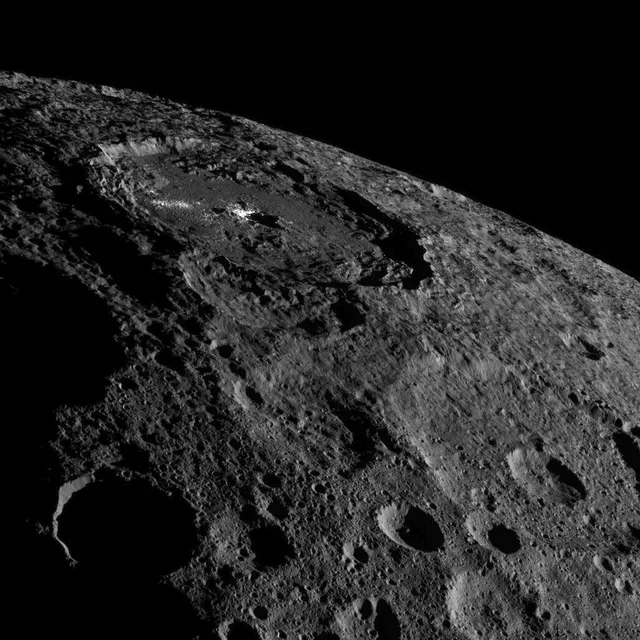
On the dark disc of Ceres, some areas look surprisingly bright. As Dawn approached, these spots attracted attention, especially in Occator Crater. Such a sharp contrast could make one think of isolated lights on a dark world.
The observations of the probe gave a mineral explanation: they are deposits of carbonates and other salts. These materials reflect light more than their environment. The dwarf planet therefore hides neither lamps nor constructions in its crater.
Dawn wasn’t limited to photographs. The mission mapped the shape, reliefs and composition of Ceres. Several clues also show the presence of ice and a more active geological history than this small cold body would suggest.
Salts also lower the freezing point of water. Their brilliance informs about the materials of a world that telescopes previously showed with far less detail.
What we know
Reflected sunlight; carbonate deposits and other salts, no city or clean light emission.
To go to the source
References accessed October 11, 2026. Linked pages may be in another language.
Signaler une erreur ou apporter une précision